The science behind barefoot shoes — and why they eliminate foot pain
Grounded Footwear is built around three design principles that work together to restore the natural foot mechanics that conventional shoes disrupt. Understanding how each feature works — and why conventional shoes cause the problems they do — helps explain why 13,427+ customers have reported significant reduction in foot pain, back pain, and fatigue after switching to barefoot-style footwear.
Every Grounded Footwear shoe is built around these three features working in combination.
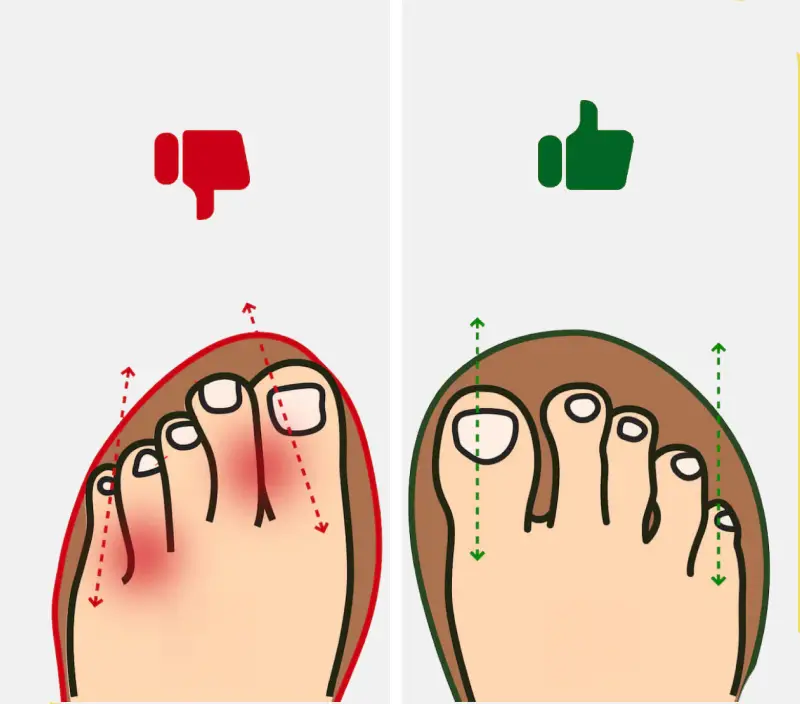
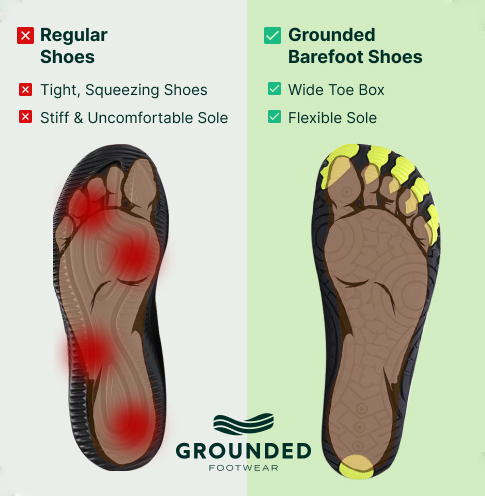
Conventional shoes are narrower at the toe than the natural foot — they force the toes inward, compressing joints, pinching nerves, and causing bunions over time. Grounded Footwear's wide toe box matches the natural width of the foot, allowing toes to spread freely. This single change eliminates the primary source of forefoot pain, bunion pressure, and Morton's neuroma symptoms for most customers within days of first wear.
Standard shoes have a heel that sits 8–15mm higher than the toe — this shortens the calf muscles and Achilles tendon over years of wear, tilts the pelvis forward, and loads the plantar fascia with chronic tension. Zero heel drop means the heel and forefoot sit at the same height, allowing the calf and Achilles to return to their natural length. This is why most plantar fasciitis customers see improvement within 2–4 weeks: the source of tension is finally removed.
Thick rigid soles prevent the foot from bending naturally and block the sensory feedback the brain uses to coordinate movement. Grounded Footwear's thin flexible sole lets the foot bend through its full natural range of motion and feel the ground — activating the 29 intrinsic foot muscles that thick-soled shoes keep permanently inactive. Stronger foot muscles means better arch support from within, improved balance, and reduced fatigue during prolonged standing or walking.
The zero heel drop allows the plantar fascia to gradually decompress and strengthen. The wide toe box eliminates forefoot tension that contributes to overall inflammation. Most plantar fasciitis customers report significant morning heel pain reduction within 2–4 weeks.
Retail workers, nurses, teachers, and warehouse staff consistently report the greatest improvements. The 70% lighter construction reduces fatigue, the wide toe box eliminates end-of-shift foot cramping, and zero heel drop removes the lower back pressure that comes from hours of standing on elevated heels.
The wide toe box removes joint compression that aggravates arthritis. The thin flexible sole improves proprioception (ground awareness), which reduces falls in older adults. Neuropathy customers often report reduced forefoot tingling and burning as nerve compression from narrow conventional shoes is eliminated.
Elevated heels tilt the pelvis forward and compress the lower spine. Zero heel drop restores neutral spinal alignment. Many customers who primarily bought Grounded Footwear for foot pain are surprised to find their chronic knee and lower back pain also improving within 4–8 weeks of consistent wear.

The foot has 29 muscles, 33 joints, and over 100 tendons and ligaments — it is designed to be a dynamic, sensory organ. Modern footwear turns it into a rigid, passive structure. Minimalist shoes with wide toe boxes and zero heel drop allow the foot to function as it was designed, and the results in pain reduction speak for themselves.
— Dr. Mark Jensen, DPM, Board-Certified Podiatrist, 22 Years of Practice